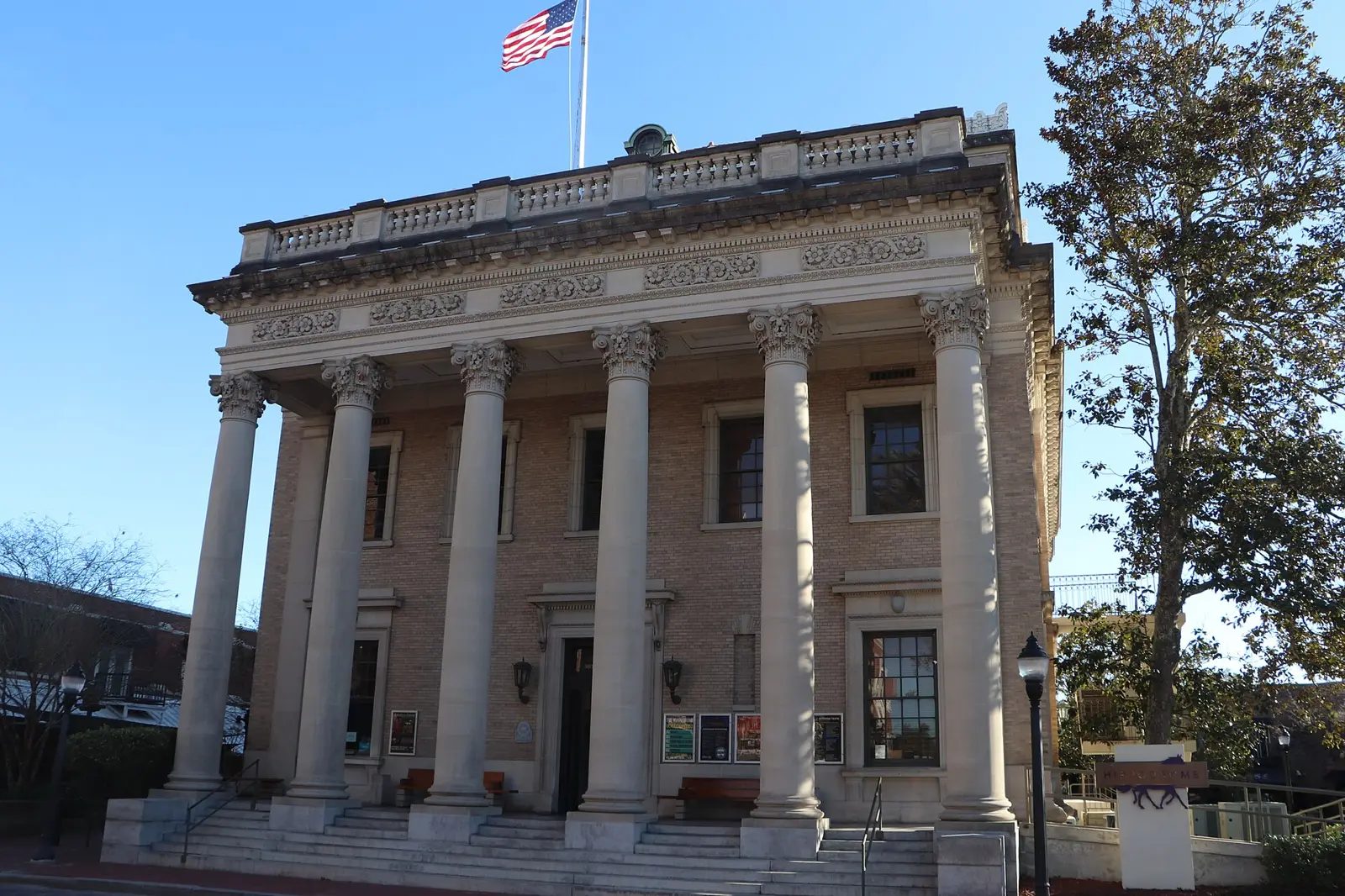
Gainesville became the Alachua County seat in 1854 and a city in 1869. It has 49 National Register of Historic Places listings, from the Matheson House to UF.
Last checked Oct. 8, 2026. History comes from the Florida Division of Historical Resources’ state historical markers and the Matheson History Museum. National Register listings come from the National Park Service’s National Register database, version of May 22, 2026. Museum hours are as each museum publishes them.
Gainesville was designated the Alachua County seat in 1854 and incorporated as a city in 1869, and it takes its name from General Edmund Gaines, commander of U.S. Army troops in Florida during the Second Seminole War, according to the state historical marker at City Hall. It was the county’s fourth seat of government.
Where to start
- Matheson History Museum: 513 E. University Ave., 352-378-2280. Free; 11 a.m. to 4 p.m. Wednesday through Saturday.
- Historic Haile Homestead: 8500 SW Archer Road, 352-336-9096. Tours Saturday and Sunday.
- Self-guided walks: the Matheson’s Duckpond neighborhood walking tour
How Gainesville began
The Florida Railroad, chartered in 1853 to link Fernandina with Cedar Key, was routed around the old county seat at Newnansville, so the county moved its seat to the newly named Gainesville, the Matheson History Museum says. The county commission chose the site for a courthouse in 1854, and the first courthouse, a frame building, was finished in 1856, according to the courthouse marker.
In 1854 citizens met at Boulware Springs, now a city park, and voted to create the new town, the city says. The first train entered Gainesville on Feb. 1, 1859, and the line reached Cedar Key by 1861. Downtown became a center of agriculture and industry, the Matheson says.
Civil War: Union cavalry raided the town on Feb. 15, 1864, and a battle was fought in its streets on Aug. 17, 1864, according to the state marker.
Reconstruction: Josiah T. Walls of Gainesville won Florida’s only U.S. House seat in 1870 and became the state’s first Black congressman, the Walls marker says.
The university: the East Florida Seminary served Gainesville until the Legislature created the University of Florida in 1905, according to the seminary marker. The historic campus buildings were designed from 1905 to 1939 in the Collegiate Gothic style.
Downtown and the historic districts
Four National Register historic districts are in Gainesville:
- Northeast Gainesville Residential District (listed 1980), known as Duckpond, one of the city’s oldest neighborhoods, the Matheson says.
- Southeast Gainesville Residential District (1988).
- Pleasant Street Historic District (1989), northwest of downtown.
- University of Florida Campus Historic District (1989).
National Register listings
The National Park Service lists 49 properties with a Gainesville address. Some are outside city limits.
| Listed | Property | Location |
|---|---|---|
| 1972 | Maj. James B. Bailey House | 1121 NW Sixth St. |
| 1973 | Matheson House | 528 SE First Ave. |
| 1973 | Hotel Thomas | NE Second to Fifth streets, NE Sixth to Seventh avenues |
| 1973 | Epworth Hall | 419 NE First St. |
| 1974 | Buckman Hall; Thomas Hall | UF campus |
| 1979 | Anderson, Bryan, Flint, Floyd, Newell and Peabody halls; Library East; Women’s Gymnasium | UF campus |
| 1979 | U.S. Post Office (now the Hippodrome) | 25 SE Second Place |
| 1980 | Northeast Gainesville Residential District | Duckpond |
| 1982 | Mary Phifer McKenzie House | 617 E. University Ave. |
| 1982 | Dixie Hotel, Hotel Kelley | 408 W. University Ave. |
| 1985 | Boulware Spring Waterworks | 3400 SE 15th St. |
| 1985 | Baird Hardware Company Warehouse | 619 S. Main St. |
| 1985 | Star Garage | 119 SE First Ave. |
| 1986 | Kanapaha (Historic Haile Homestead) | 8500 SW Archer Road |
| 1986 | Rolfs Hall | UF campus |
| 1988 | Southeast Gainesville Residential District | East of downtown |
| 1989 | Pleasant Street Historic District | Northwest of downtown |
| 1989 | University of Florida Campus Historic District | UF campus |
| 1990 | Old P.K. Yonge Laboratory School | UF campus |
| 1994 | Cox Furniture Store; Cox Furniture Warehouse | 19 SE First Ave.; 602 S. Main St. |
| 1996 | Old Gainesville Depot | 203 SE Depot Ave. |
| 1998 | Masonic Temple | 215 N. Main St. |
| 2001 | Lake Pithlachocco Canoe Site | Location restricted |
| 2003 | Liberty Hill Schoolhouse | 7600 NW 23rd Ave. |
| 2005 | Shady Grove Primitive Baptist Church | 804 SW Fifth St. |
| 2008 | Engineering Industries Building; The Hub; Yulee-Mallory-Reid Dormitory Complex | UF campus |
| 2009 | Mission San Francisco de Potano | Location restricted |
| 2010 | A. Quinn Jones House | 1013 NW Seventh Ave. |
| 2015 | Weil-Cassisi House; Dan Branch House | 3105 SW Fifth Court; 5707 SW 17th Drive |
| 2017 | Devil’s Millhopper | Location restricted |
| 2017 | Cox Family Log House | 1639 NW 11th Road |
| 2018 | Carlos and Marjorie Proctor Log House and Cottage | 2250 NW Eighth Ave. |
| 2021 | Old Mount Carmel Baptist Church | 429 NW Fourth St. |
| 2021 | University Evangelical Lutheran Church Complex | 1826 W. University Ave. |
| 2022 | Federal Building, United States Post Office, and Court House | 401 SE First Ave. |
| 2023 | Church of God by Faith | 302 SW Eighth Ave. |
| 2024 | Lakeshore Towers | 2306 SW 13th St. |
The Park Service restricts the locations of three listings.
Museums and historic sites to visit
| Place | Address | Hours as published | Cost |
|---|---|---|---|
| Matheson History Museum | 513 E. University Ave. | 11 a.m. to 4 p.m. Wednesday to Saturday | Free |
| Historic Haile Homestead | 8500 SW Archer Road | Saturday 10 a.m. to 2 p.m.; Sunday noon to 4 p.m. | See site |
| Harn Museum of Art | UF Cultural Plaza, SW 34th Street and Hull Road | 10 a.m. to 5 p.m. Tuesday to Saturday; 1 to 5 p.m. Sunday | Free |
The Matheson’s museum, library and archives sit beside the 1857 Matheson homestead, whose tours are paused during a rehabilitation project, the museum says. The Haile Homestead’s 1856 house is not heated or air-conditioned; no reservation is needed on weekends.
What this means for you
- Start downtown: the Matheson and the City Hall markers are a few blocks apart on University Avenue.
- Walk Duckpond with the free online tour.
- Questions about a historic district? The city’s Planning Division is 352-334-5023.
Related: parks and trails, population and growth and getting around Gainesville.
Frequently asked questions
When was Gainesville, Florida founded?
Gainesville was designated the Alachua County seat in 1854 and incorporated as a city in 1869, according to the state historical marker at City Hall.
Who is Gainesville, Florida named after?
General Edmund Gaines, commander of U.S. Army troops in Florida during the Second Seminole War, according to the Florida Division of Historical Resources marker at City Hall.
How many National Register historic places are in Gainesville?
The National Park Service lists 49 National Register of Historic Places listings with a Gainesville address, including four historic districts, as of May 22, 2026.
Is the Matheson History Museum free?
Yes. Admission is free, with donations encouraged. The museum at 513 E. University Ave. is open 11 a.m. to 4 p.m. Wednesday through Saturday.
Have your say